
HISTORY
From Chapel to Ravo
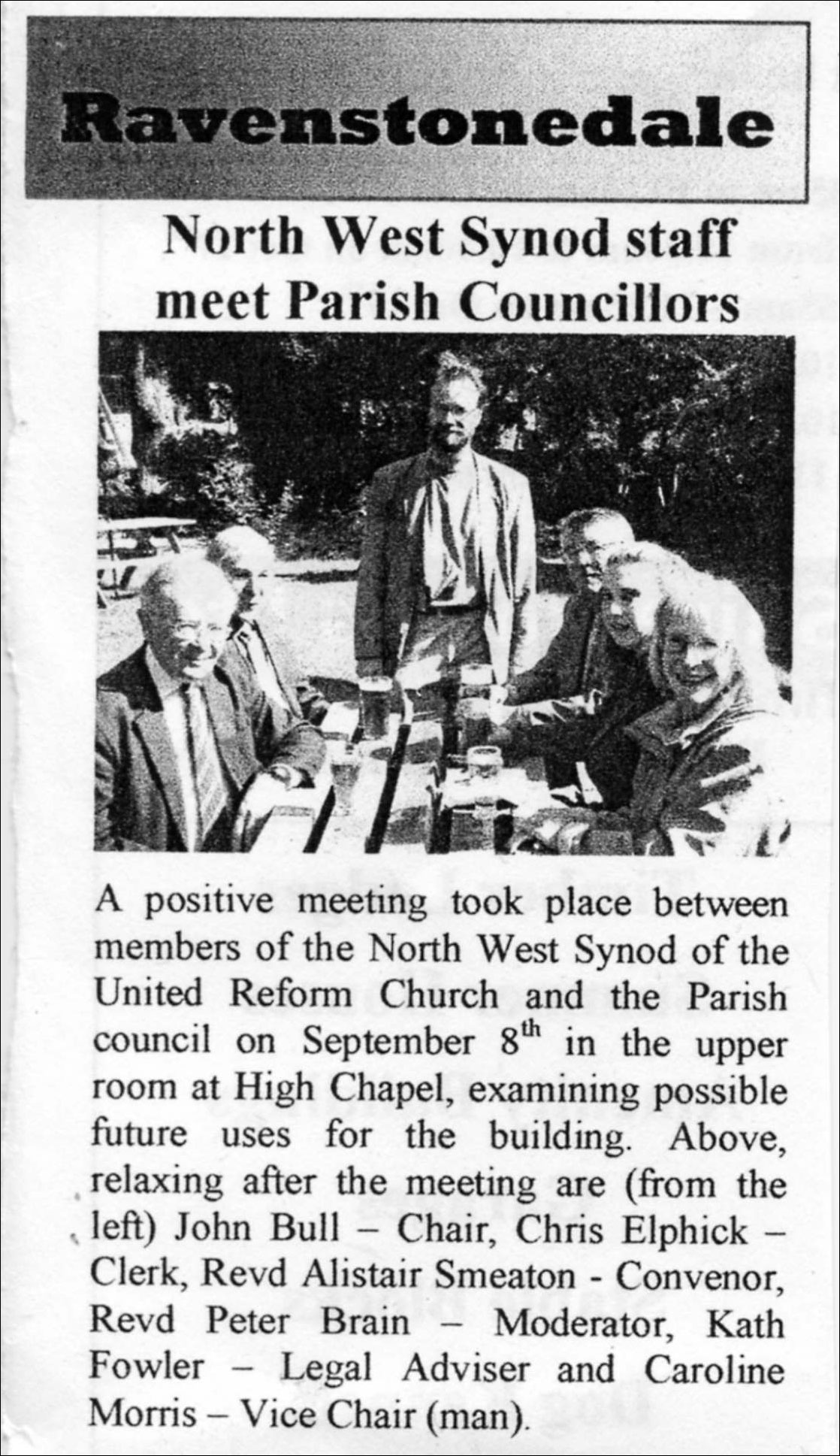
Ravenstonedale Community and Heritage Centre (Ravo) was formerly a chapel for the United Reformed Church. Dating back to 1727 and known in Ravenstonedale as High Chapel the final service was held on 29th April 2006 after which it closed as a place of worship. The following 4 years, under the stewardship of Frank Chalmers, acting caretaker, together with a team of volunteers, the building acted as a focal point for local history enthusiasts. During this time locals enjoyed social activities here under the banner of 'Open House'. In 2011 the chapel was purchased by Ravenstonedale Parish Council for £1000 after which it was rebranded as the Ravenstonedale Community and Heritage Centre. It has since developed into a thriving resource serving the local community and beyond.
References
High Chapel History Archive
History of High Chapel
High Chapel Restoration (July )2000)
The Last Hymn sang on June 29th 2006
RPC Minutes detailing development of RC&H Centre
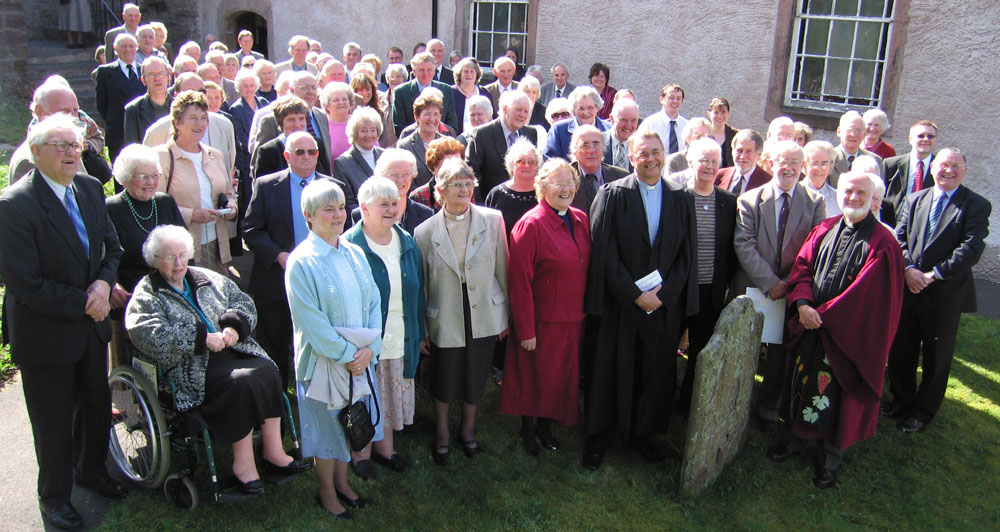
Last Service
The picture below was taken on 29th April 2006. It shows the congregation that attended the last service at High Chapel on that day. Following this service the chapel ceased to be a place of worship and over the next few years transitioned into the Ravenstonedale Community and Heritage Centre.
The History of High Chapel by Chris Irwin
High Chapel is the name of what is now the United Reformed Church halfway up the main street of Ravenstonedale. The name derives from its position, the Methodist Low Chapel is further down the hill. The building dates from 1727 which is the year it was licensed as a meeting place for protestant dissenters (people who did not want an official state church), but these dissenters had been meeting in private houses and then in one particular place since 1662.
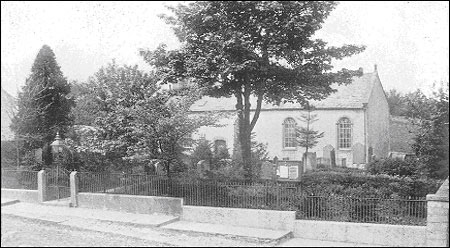
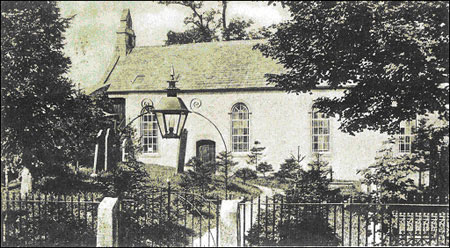
This last photo, dated we think 1904, was offered by Roy & Barbara Hopkins of Ravenstonedale. It shows many differences to the current chapel – young trees, the iron lamp holder over the gate (which we hope to replace), entrance door between the first & second tall windows and the first window still complete.
The building as you see it coming through the front gate has changed very much since then. The three round-headed windows were put in 1868, replacing "a double row of small ones". Originally there were two doors on the east side opening directly into the stone-floored chapel. In the early 19th century a Sunday School was started and a room provided for this at the uphill end of the church with living space above.
The belfry was erected in 1813 and has since been moved to the south end of the building. Originally there were box pews and a three-decker pulpit but these, and the gallery which ran around three sides of the building, were removed in 1868.
Between 1887 and 1907 the doors were blocked up and a new door made at the end, opening into a vestibule. This, and the boiler room once were the schoolroom and library. The vestry was extended and the rooms above made into one (which doubles as a gallery) and extended over the vestry. Other changes have included the present organ.
A tablet on the inside wall tells the history of the church. It relates how it was founded with money provided by Lord Wharton and others. Other people who were "in at the beginning" were "George Parkin of Lowcome, yeoman, Thomas Fothergill of Brownbarr, yeoman, Peter Pinder of the Borough Of Southwark, gentleman, William Milner of Assefell, Christopher Todd of the Nethergarths, Thomas Knewstubb of the Dubbs, James Perkin of Greenside, Richard Hunter of Bowbarhead, Robert Fothergill and George Murthwaite both of Wath, and Henry Cautley of Greenside, yeomen."
The names and spellings are from an indenture of 1693.
Christopher Jackson is named as the first Minister. He was the Anglican clergyman at Crosby Garrett during the commonwealth when parish churches were conducted on Presbyterian lines. With the Restoration churches had to return to the prayer book and the clergy had to accept the thirty-nine articles of anglican faith or be 'ejected'. Christopher Jackson was one of these and he came to Ravenstonedale to preach to the 'dissenters', those who believed in the freedom of worship. His first 'church' was in his own house and those of like feeling.
During the reigns of Charles II and James II dissenters were persecuted, and it may be that those in Ravenstonedale were protected by Lord Wharton's patronage.
In 1689 the Act of Tolerance gave dissenters freedom of worship and the Ravenstonedale group had their first licensed meeting-house in George Parkin's house and called Timothy Punshon to be their Minister. Since that time the High Chapel has continued to serve those who seek an alternative to the Church of England. Originally Presbyterian, it became Independent (Congregationalist) and latterly United Reformed.
There is a memorial to the Reverend George Manning in the church. He was a much-loved minister and served here twice, High Chapel being his first ministry and then his last. His son, Bernard Lord Manning, was a famous Congregational writer and Cambridge mediaeval scholar.
The pulpit, reading desk and communion rails now in High Chapel were designed by him for Cheshunt College. When the College closed the trustees presented these furnishings as a memorial to him in 1967. Visiting preachers and others often speak of the continuity of High Chapel and it is easy to see why. Some of the same surnames persist over many years.
Looking at the gravestones you will see many Hewetsons remembered and this name first appears in the church records (as far as we are aware) in 1727 when Richard Hewetson of Ellergill sold land for the building for £6 and gave £4 towards the building.
Hunter is another familiar name, first mentioned in 1693. The same farm names are there that we know today. All this helps to give a sense of continuity - even a feeling that nothing much changes.
The Manse was built in 1854 and is at the top of the village, replacing an older Manse which was demolished early this century. Sadly as various members moved from the area the Chapel became unviable, with too few in the congregation to maintain the services and the various routine tasks. Because of this the Chapel closed in April 2006. The records of the church, and a detailed history, will be deposited in the County Record Office at Kendal.
“Since the last service, members of the village and interested people have begun to find ways of funding the chapel to remain as a historic building and to find more diverse uses to ensure its future. We have been compassionately assisted in this by the North West Synod of the URC, who are partners in this venture. We hope to keep the Chapel in part as a sacred space, where world weary people can find quiet and solace.” – Frank Chalmers, Assistant Caretaker, 2006.
Post Script; in 2007 the URC has offered leasing arrangements that generously allow for a graduated development. The religious”furniture” – lectern, pulpit & communion rails, are to be kept in place until High Chapel’s future is determined.
The work by volunteers to preserve, maintain and restore the chapel continues and we now have a regular Wednesday “Open House” where visitors, passer-by and residents can enjoy coffee and conversation or look through the history archives, find out about Red Squirrels and look at any exhibitions or displays. “Open House” was open from 10.30 till 12.00 every Wednesday from February till November.